
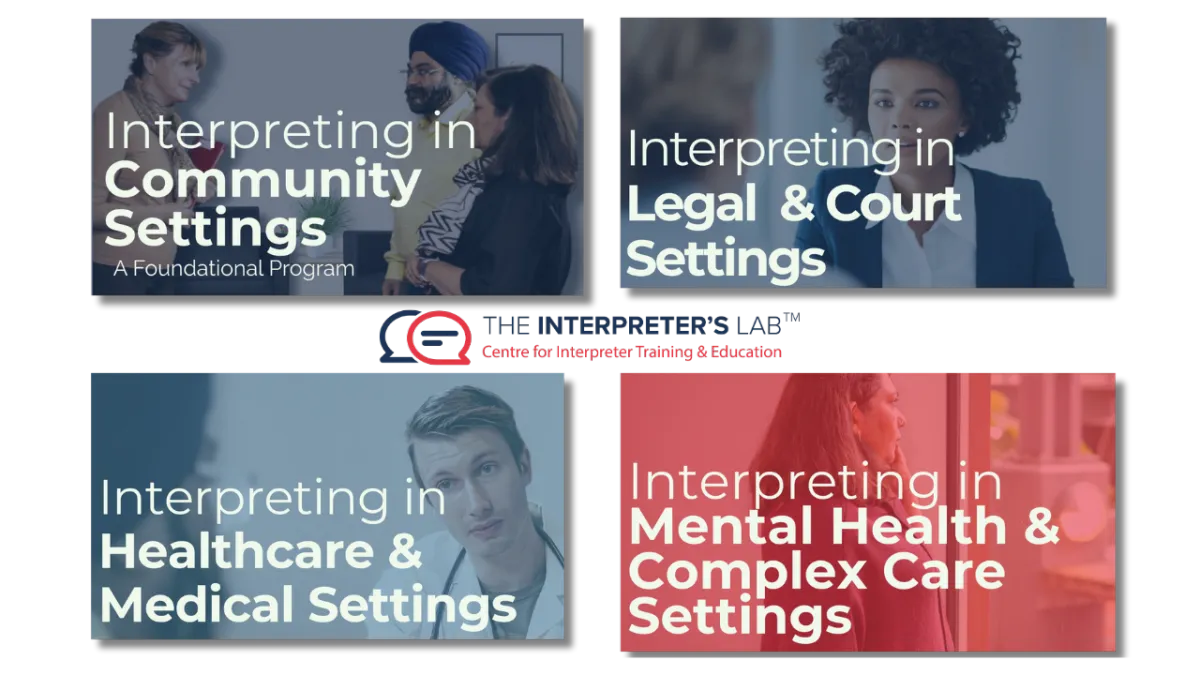
The Interpreter's Lab individual interpreter training programs are designed to equip you for today's competitive interpreting language market.
Blended self-directed & instructor-led training programs.
Training Plus Continuing Education
Membership-based professional development opportunities, support services and a wide range of accessible training options to fit your needs.
Our integrated approach to training ensures you receive personalized. Get access to peer and alumni networking, all through a secure and user-friendly online learning platform.
Everything you need to start and succeed as an interpreter
Learning opportunities led by industry professionals
Practical, sector-specific training
Comprehensive understanding of the industry and work opportunities
Job-ready skills that are transferrable
Confidence to take the next step in your career
What makes The Interpreter's Lab unique
Live classes with experienced and expert instructors
Step-by- step skill building through real-world scenarios
A clear pathway to work with trusted agencies across Canada
Certificate recognized nationally
No additional fees or administrative charges

Interpreting in Community Settings: A Foundational Program (ICS) is designed for bilingual adults interested in gaining the skills, knowledge and confidence necessary to succeed as an interpreters.
This course builds foundational skills through practical, hands-on live lessons. ICS focuses on building memory and listening skills, consecutive interpreting, sight-translation, note-taking, and managing challenging situations, along with the ethical framework and protocols that guide professional practice.
Stand apart as a qualified language professional.
You will learn:
• The role and responsibilities of the community interpreter
• Interpersonal and intercultural communication skills
• Core interpreting skills: memory, note-taking, and message transfer
• Consecutive and sight interpreting techniques
• Terminology development and research strategies
• Ethics and standards of practice
• Common community settings and protocols
• The interpreting marketplace and career pathways
Advanced TRAINING FOR Specialized Settings
Advanced courses that extend beyond specialized terminology.
These programs focus on the context and structure of each setting, the interpreter's role in practice, ethical considerations, and advanced interpreting skills. Build deeper knowledge, stronger judgment, and more refined competencies where it matters.
Our specialized training programs include:
Interpreting in Healthcare Settings (IHS)
Interpreting in Legal and Court Settings (ILCS)
Interpreting in Mental Health and Complex Care (IMS)
Each program gives interpreters a solid foundation to expand their professional practice into new areas of business and growth.

Interpreting in Legal and Court Settings (ILCS)
Legal and court interpreting supports communication during hearings, police interviews, trials, and other formal proceedings. This work requires strong foundational skills, sound judgment, and a clear understanding of legal terminology, court procedures, and the interpreter’s role. This course will give you practical, foundational preparation for this field. Recognized by the Ministry of Attorney General, Court Services Branch, it also prepares interpreters to work with professionalism, accuracy, and ethical conduct in legal settings.
You will learn:
• The role of the interpreter in legal and court settings
• Courtroom procedures, protocols, and settings
• The Canadian legal and court system
• Law enforcement and investigative contexts (e.g., RCMP)
• Legal terminology and research strategies
• Memory, note-taking, and sight translation for legal texts
• Consecutive and simultaneous interpreting practice
• Professional ethics and standards for judicial interpreters
Interpreting in Healthcare Settings (IHS)
Healthcare is one of Canada's largest employers of interpreters. Building skills in this area opens more work opportunities and deepens your understanding of how the Canadian healthcare system functions. This course prepares you for assignments in hospitals, clinics, emergency rooms, and complex care settings, helping you stand out to agencies and organizations seeking qualified healthcare interpreters.
You will learn:
• The professional role of the healthcare interpreter
• Core interpreting skills for healthcare environments
• Medical and healthcare terminology
• Structure of the Canadian healthcare system
• Specialties, departments, and levels of care
• Common illnesses, conditions, and treatments
• Models of health and well-being
• Intercultural communication in healthcare settings
Interpreting in Mental Health and Complex Care
This program is for experienced interpreters who want to work in complex, dynamic appointments, with a specific focus in mental health, psychiatric appointments, forensic psychiatry, and other specialized care settings. It will prepare interpreters for work in gerontology, speech-language pathology, and Medical Assistance in Dying (MAiD).
The training focuses on real-world practice: working with interdisciplinary teams, managing challenging conversations, and using techniques commonly required in mental health and complex care.
You will learn:
• The role of the interpreter in mental health and complex care
• Terminology related to mental health and illness
• Mental health conditions, treatments, and medications
• Interdisciplinary teams and practitioner roles
• Cultural factors affecting mental health communication
• Mental health interview dynamics and conversational flow
• Trauma, secondary trauma, and interpreter self-care
• Intercultural communication in mental health settings
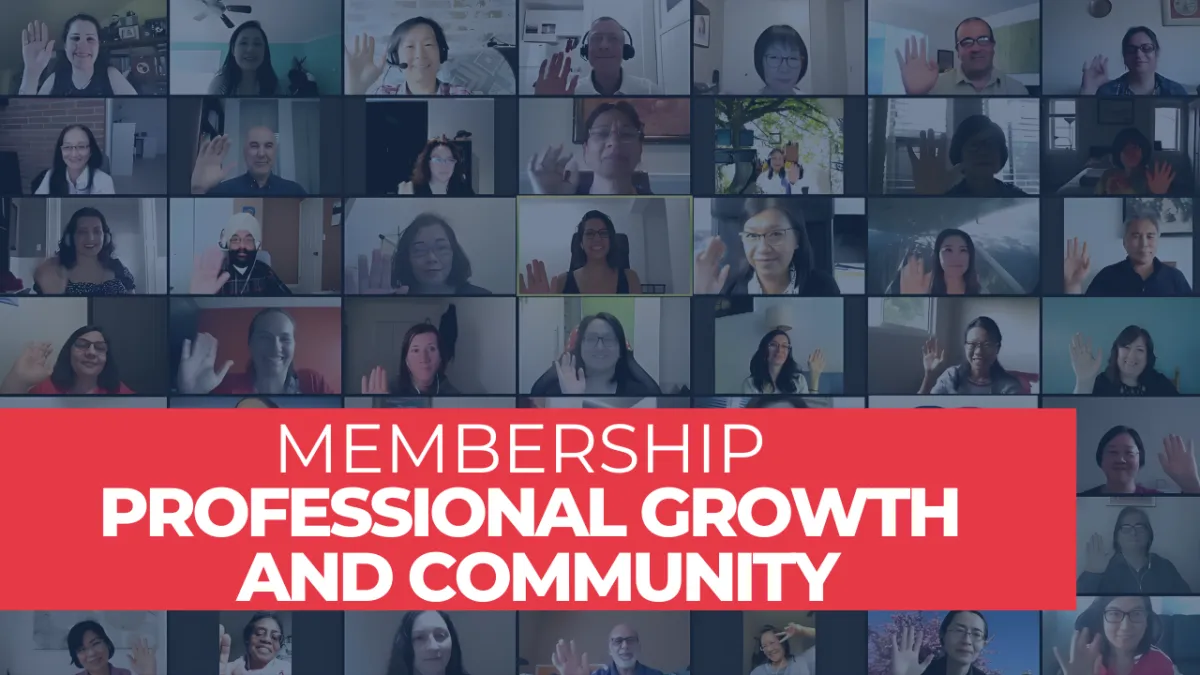
Learn, Grow, Belong
An annual membership with The Interpreter’s Lab gives you access to practical training, ongoing professional development, and a supportive community of interpreters.
Membership is designed to help you build your skills, strengthen your professional identity, and move forward in a rewarding interpreting career.
Whether you are just starting out or already working in the field, membership provides the tools, guidance, and connections you need to succeed in community settings and in specialized areas such as healthcare and legal interpreting.
Join a community committed to high standards, real-world practice, and professional growth.
“If you want to improve and keep current as a professional you need to be a member of the TIL” — Jennnifer J TIL Member
Annual Membership Includes:
Monthly speakers series with industry experts
Unlimited access to speakers series recordings
Reduced pricing on the CILISAT exam
Interpreter exam preparation support
Interactive professional development workshops
Quarterly drop-in and debrief sessions
Annual masterclass discount
Access to our exclusive online community hub

The course is so valuable. I got the tools I need to continue to not only consistently bridge the language barriers patients have, accurately interpret medical terms, but ensure empathetic communication between healthcare providers and patients. I will continue to enhance my proficiency and ability to serve in this critical role.


As an alumni and annual member since 2023, I would recommend TIL to anyone seeking quality training and to working interpreters looking for professional development. The selection of the topics and speakers for The Professional Development Speaker Series have been excellent. Very informative and educational.

The Interpreter's Lab has done a great job in helping interpreters develop our knowledge and skills to a higher professional level. I have benefited a lot. Thank you for your great dedication in supporting us interpreters and providing us with such varied resources. Really appreciated!

Founder - Angela Sasso

I’ve worked since 1990 to advance language access in justice, healthcare, and social services, guided by the belief that interpreters are essential to ethical and effective public services.
My path into the field began after volunteering on a community development project in Ecuador. When I returned to Canada and started interpreting, a difficult encounter with a Guatemalan patient made me realize how much better preparation interpreters needed, especially in healthcare. That moment shaped the direction of my career.
Since then, I’ve contributed to national and international efforts to strengthen interpreter training and certification, including the Health Care Interpreter Partnership Project and ISO/TS 6253:2024, the global benchmark for interpreter training programs. I have also worked with CTTIC and STIBC on Canada’s community and medical interpreter certifications, and since 2010 I’ve served as an expert with ISO TC 37/SC 5 on international standards.
In 2012, I founded The Interpreter’s Lab to provide accessible, standards-based training grounded in real-world practice and to support interpreters in building sustainable careers. Standards, integrity, equity, and access continue to guide our work.